AI
Why the Semantic Model Still Matters in the Age of AI Analytics
The rapid evolution of AI driven analytics is changing how users interact with data. Instead of navigating dashboards or writing queries, users can now ask natural language questions and receive analytical insights…
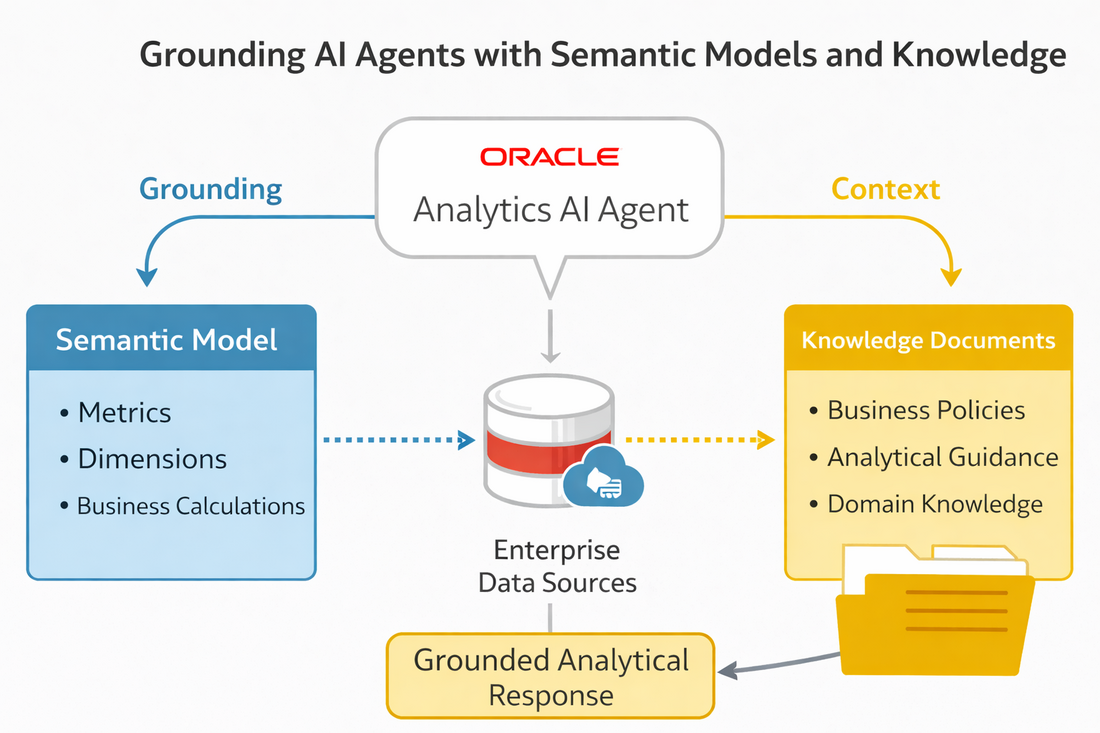
The rapid evolution of AI driven analytics is changing how users interact with data. Instead of navigating dashboards or writing queries, users can now ask natural language questions and receive analytical insights instantly.
Oracle Analytics AI Agents are a good example of this shift. They allow users to explore data conversationally while combining structured analytics with contextual knowledge.
At first glance it may appear that traditional components of business intelligence architecture such as the semantic model are becoming less important in this new AI driven world.
In reality, the opposite is true.
As organisations introduce AI agents into their analytics platforms, the semantic model becomes even more important because it provides the structure and governance required to interpret enterprise data correctly.
Conversational Analytics in Oracle Analytics
Oracle Analytics AI Agents allow users to ask analytical questions directly against governed datasets.
For example, the agent can analyse football club performance data and generate insights from natural language questions.
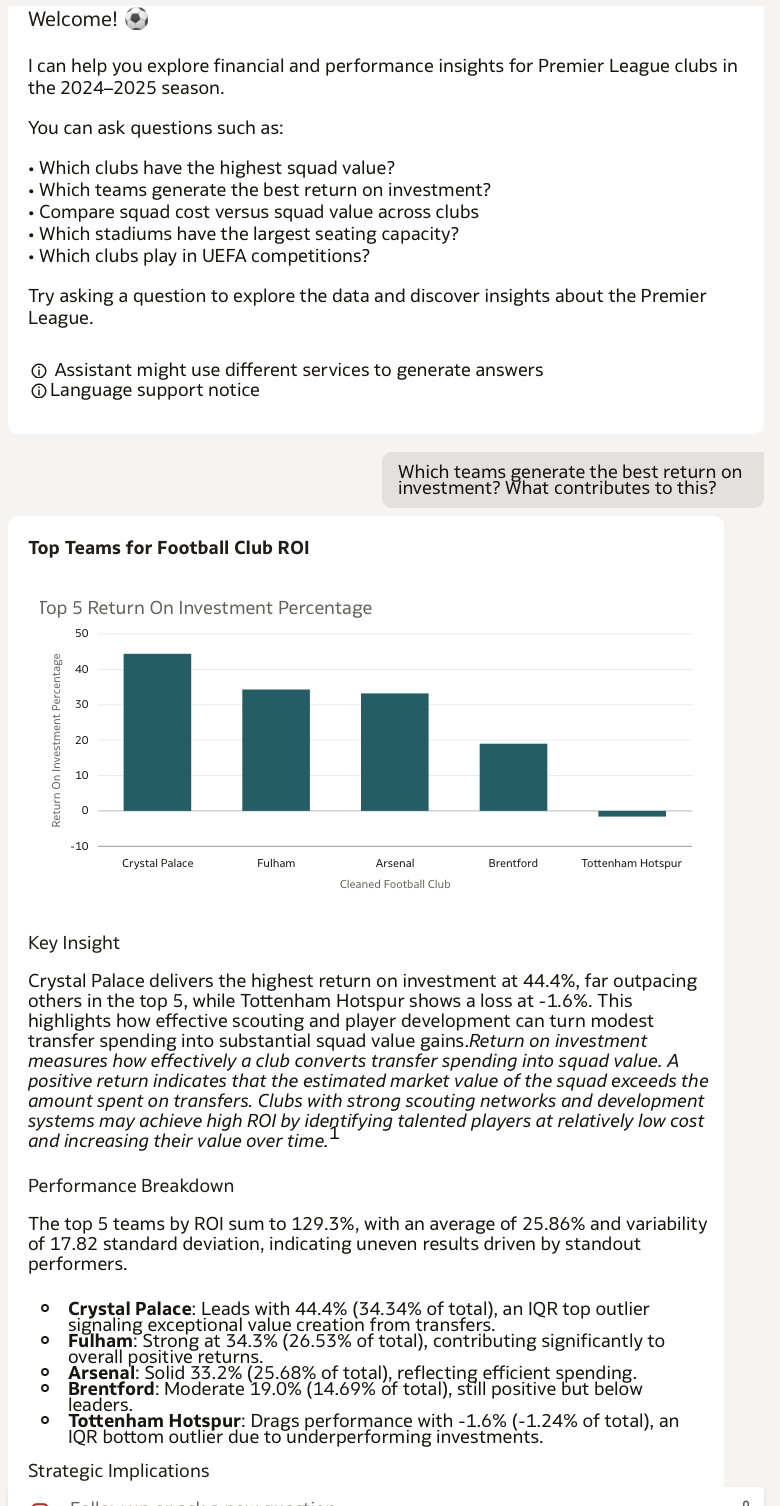
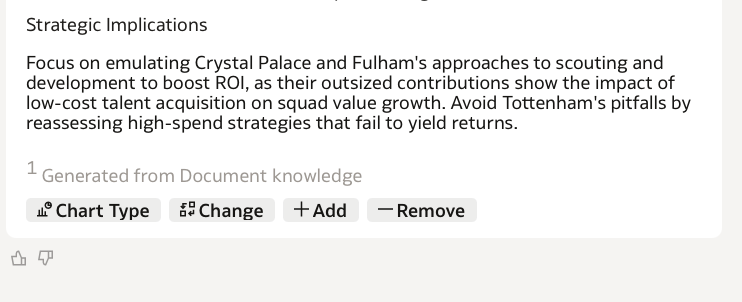
This conversational interface makes analytics far more accessible, but it also raises an important architectural question:
How does the AI agent understand what the data actually means?
The Semantic Model as the Foundation of Enterprise AnalyticsEnterprise data is typically stored in structures optimised for storage and processing rather than business interpretation.
Tables may contain technical column names, encoded values or highly normalised structures that make sense to engineers but not necessarily to business users.
The semantic model solves this problem by defining the business meaning of the data.
Within Oracle Analytics, the semantic model provides:
- business friendly naming
- defined metrics and calculations
- hierarchies and relationships
- governed data access rules
The semantic model effectively acts as the bridge between raw data and business understanding.
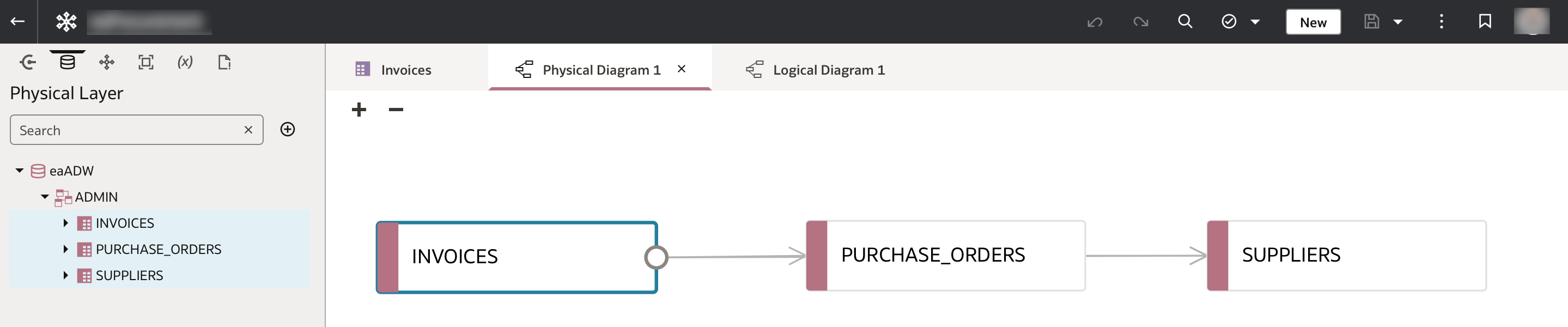
This structure allows the platform to interpret analytical questions consistently.
Governing Business Metrics
Another critical role of the semantic layer is defining the organisation’s key metrics.
Metrics such as invoice amount, revenue, order value or customer counts often require precise definitions and calculations.
These definitions are implemented directly within the semantic model.
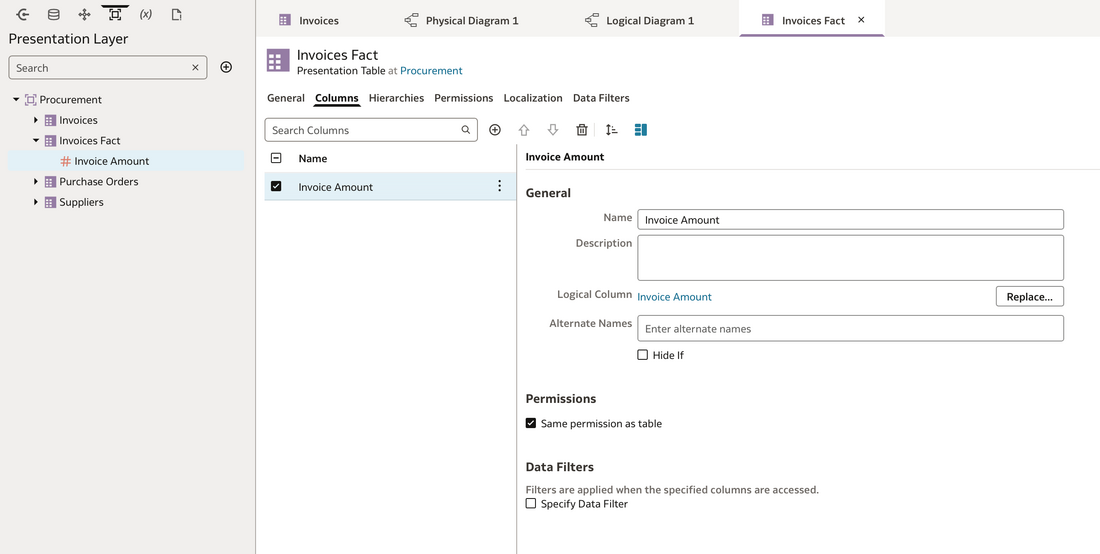
By centralising metric definitions, Oracle Analytics ensures that dashboards, reports and AI agents all rely on the same authoritative calculations.
This prevents inconsistencies and ensures that analytical answers remain aligned with business definitions.
Knowledge Documents: Adding Context to AI AgentsWhile the semantic model defines the structure of enterprise data, Oracle Analytics AI Agents can also use knowledge documents to provide additional context.
These documents may contain:
- definitions of business concepts
- policy explanations
- domain specific knowledge
- analytical guidance
Oracle recently introduced additional configuration options when uploading these documents.
Administrators can now specify both document priority and document language.
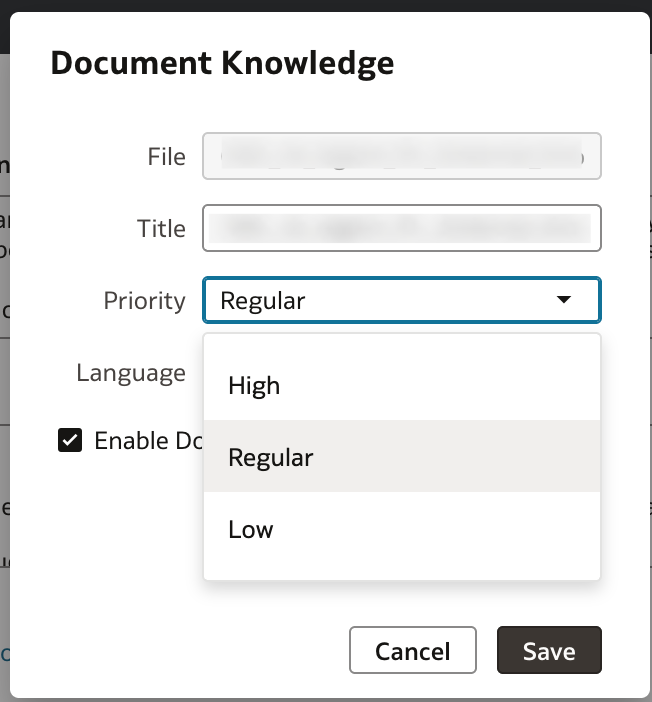
Document priority allows organisations to control which documents are treated as more authoritative when the AI agent retrieves knowledge.
For example, curated internal documentation may be prioritised over supplementary material.
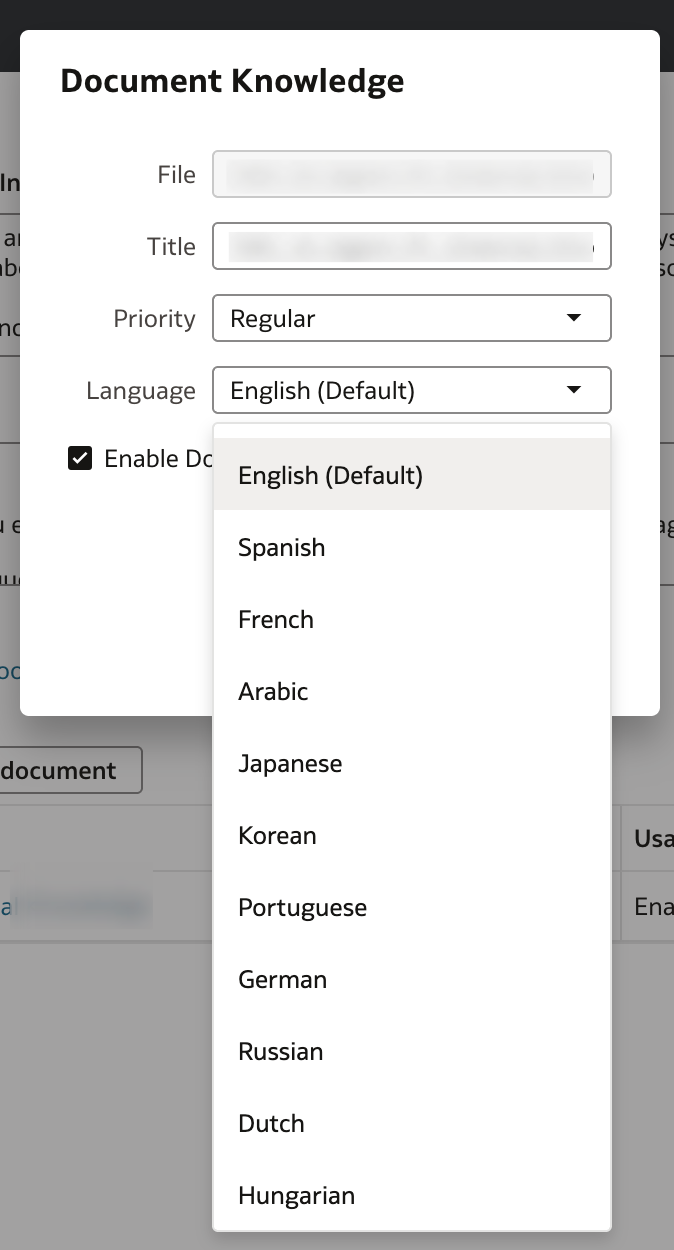
The language setting allows organisations operating across multiple regions to maintain multilingual knowledge sources for a single AI agent.
This ensures that the agent retrieves the most relevant document based on the language of the user’s question.
Semantic Models and Knowledge Documents Working Together
The semantic model and knowledge documents play complementary roles in grounding AI generated answers.
The semantic model provides:
- structured data definitions
- governed metrics
- relationships between datasets
Knowledge documents provide:
- contextual explanations
- business policies
- domain specific guidance
Together they form two layers of grounding:
Structured grounding
Provided by the semantic model, ensuring that queries are interpreted correctly against governed datasets.
Contextual grounding
Provided by knowledge documents, helping the AI agent interpret business concepts and policies.
This combination helps ensure that AI generated insights remain accurate and aligned with organisational definitions.
Why This Matters for Enterprise AI
The introduction of AI agents does not eliminate the need for well designed analytics architecture.
If anything, it reinforces its importance.
Conversational analytics may change the user interface, but the underlying principles of governed metrics, well structured semantic models and curated knowledge remain essential.
For architects and data leaders, the lesson is clear:
Successful enterprise AI is not just about models and prompts. It is about grounding those models in trusted, well structured organisational knowledge.