AI · AIDP
Oracle AI Data Platform is not net new technology; it is a new set of opinions!
A common misconception about the Oracle AI Data Platform is that it represents a net new set of technologies. In reality, it is built deliberately on familiar OCI services such as Object Storage, Spark based processing,…
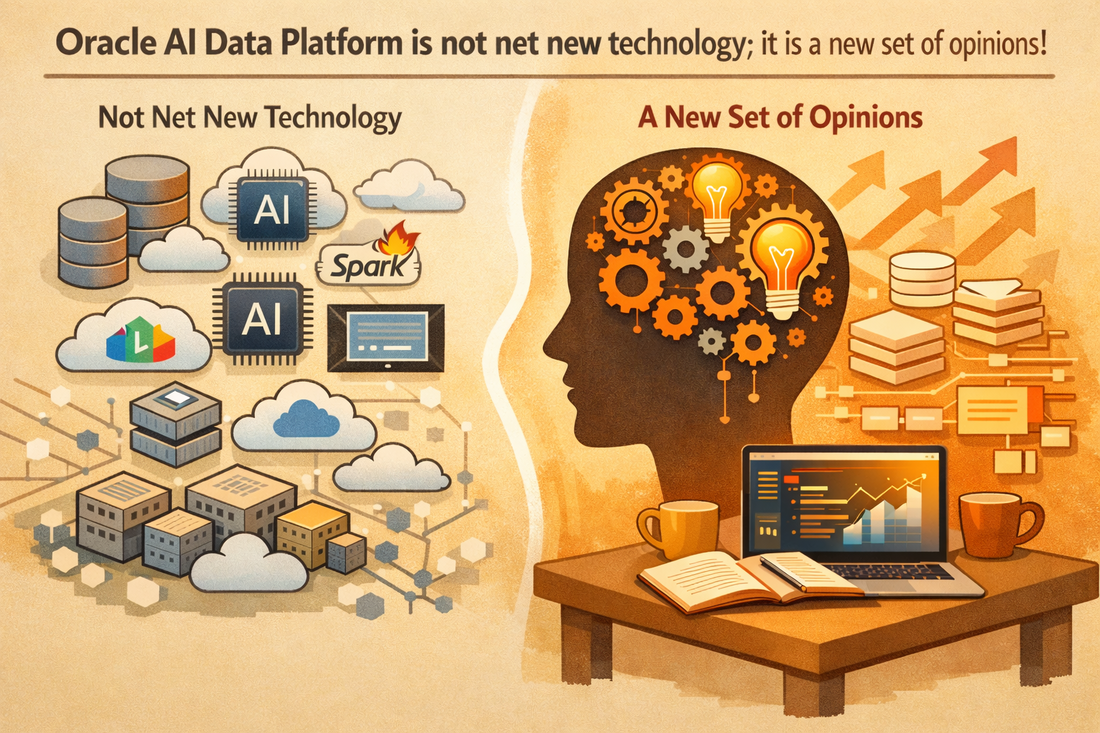
A common misconception about the Oracle AI Data Platform is that it represents a net new set of technologies. In reality, it is built deliberately on familiar OCI services such as Object Storage, Spark based processing, Generative AI, AI Autonomous Databases, IAM and networking.
That observation is important but often misunderstood.
Oracle AI Data Platform is not trying to introduce new infrastructure primitives. Instead, it takes proven OCI capabilities and layers clear architectural opinions on top of them. The value lies less in invention and more in acceleration, consistency and time to value.
Those opinions are most clearly expressed through the Oracle AI Data Platform workbench, which acts as the unifying layer where these architectural choices become operational.
From flexibility to intention
Raw OCI is intentionally unopinionated. It offers enormous freedom, but also places the burden of design, integration and governance on the customer. Over time, most organisations converge on similar patterns, often after costly experimentation.
Oracle AI Data Platform reflects those patterns back as defaults. It provides a paved path rather than a blank canvas.
What opinionated means in practice
Those opinions are explicit and deliberate.
- Medallion style data flow is assumed
Data is treated as a lifecycle from raw to refined to curated.
- Lakehouse first storage
Object Storage is the system of record, not a transient staging area.
- Co-location of data and AI workloads
Data engineering, analytics and AI operate on the same governed data foundation rather than across disconnected systems.
- Spark and SQL as complementary engines
Different workloads use the engine that fits best without forcing a single paradigm.
- AI as a native workload
Generative AI and ML are first class participants in the data lifecycle, not bolt ons.
- Governance by default
Security, access control and lineage are expected from day one.
- Cataloguing as a first-class concern
Data assets, pipelines and AI artefacts are discoverable, describable and governable through the same platform rather than managed in separate tooling.
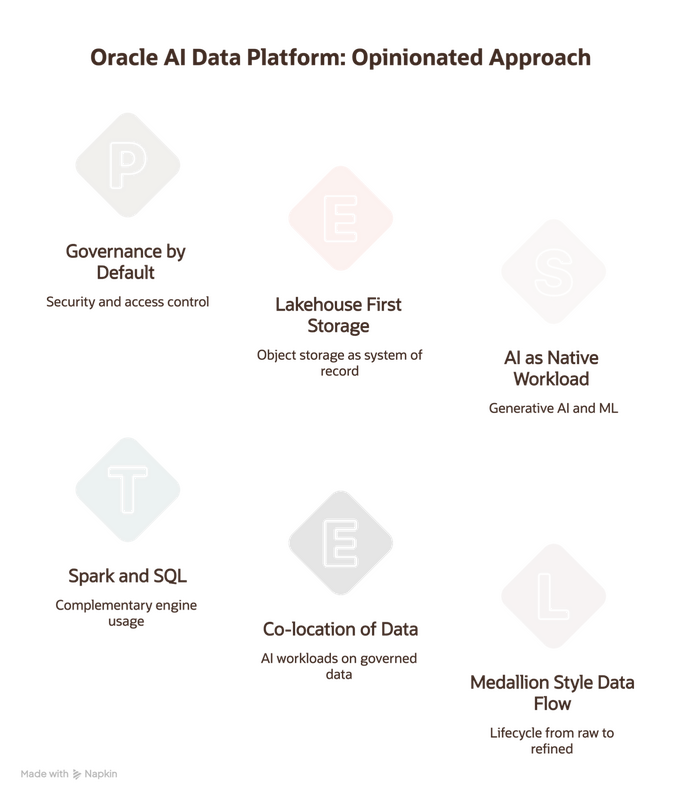
These are not hard constraints, but the happy path is clear. That clarity is the essence of an opinionated platform.
Why co locating data and AI matters
The co-location of data and AI is one of the most important opinions in Oracle AI Data Platform.
Oracle is making a clear statement that models should move closer to the data, not the other way around. Feature engineering, prompt grounding, fine tuning and inference all happen against shared, governed datasets rather than copied extracts.
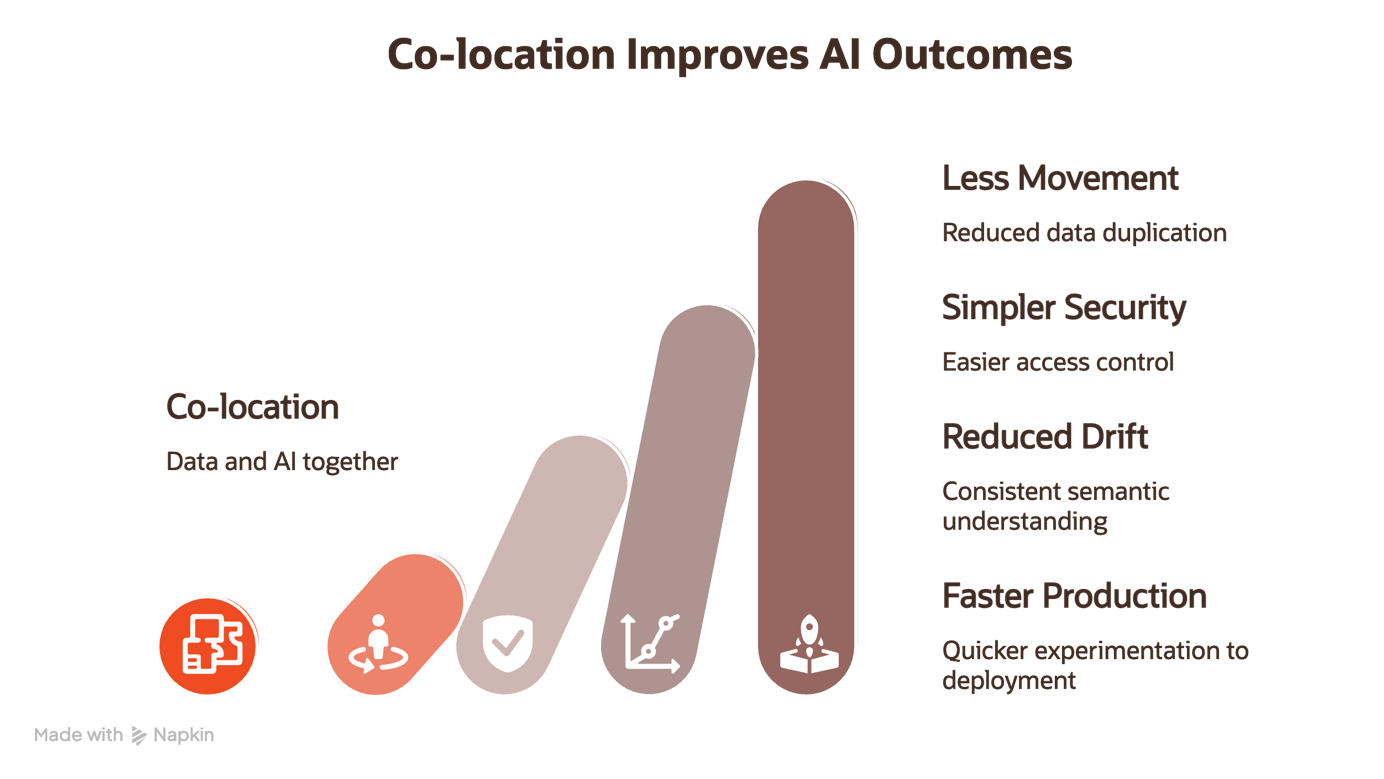
The impact is practical rather than theoretical.
- Less data movement and duplication
- Simpler security and access control
- Reduced semantic drift between analytics and AI
- Faster transition from experimentation to production
This directly affects cost, operability and trust in AI driven outcomes.
The workbench as the unifying layer
This is where the workbench becomes central.
It is not just a notebook environment.
The workbench also provides a focal point for cataloguing and governance. Data assets, transformations, analytical outputs and AI artefacts can be understood, discovered and governed in context, rather than existing as disconnected technical components. This reinforces the platform’s opinion that trust, lineage and discoverability are foundational requirements for AI, not optional extras. It is the place where Oracle’s architectural opinions become operational. Notebooks, Spark jobs, SQL queries and Generative AI interactions all run in the same context, over the same data, governed by the same security model.
Rather than stitching together multiple consoles and services, the workbench provides a coherent lifecycle from ingestion to analytics to AI.
A deliberate trade off
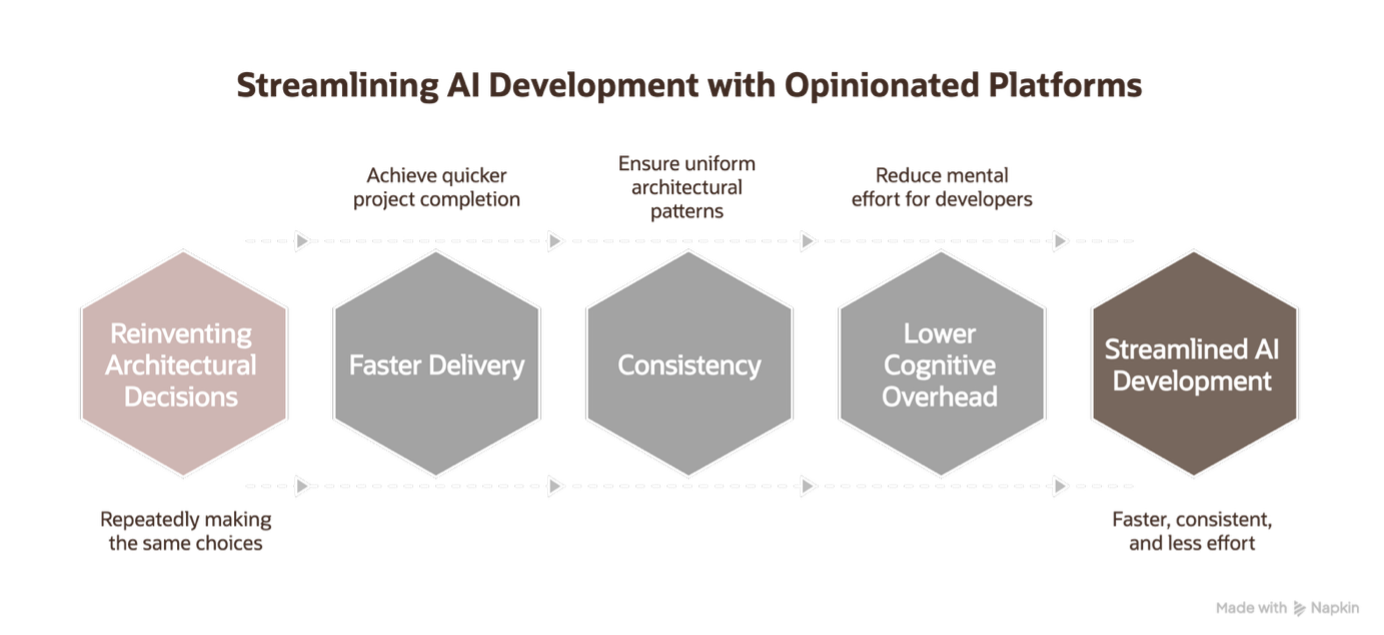
Opinionated platforms always involve a trade-off. Some design freedom is exchanged for faster delivery, consistency and lower cognitive overhead. For most organisations, especially as AI moves into regulated and business critical use cases, that trade-off is desirable.
Oracle AI Data Platform does not remove flexibility. It removes the need to repeatedly reinvent the same architectural decisions.
Part of a wider strategy
These opinions align closely with how Oracle is positioning analytics and AI more broadly, including Oracle Analytics Cloud and Fusion AI Data Platform/Fusion Data Intelligence.
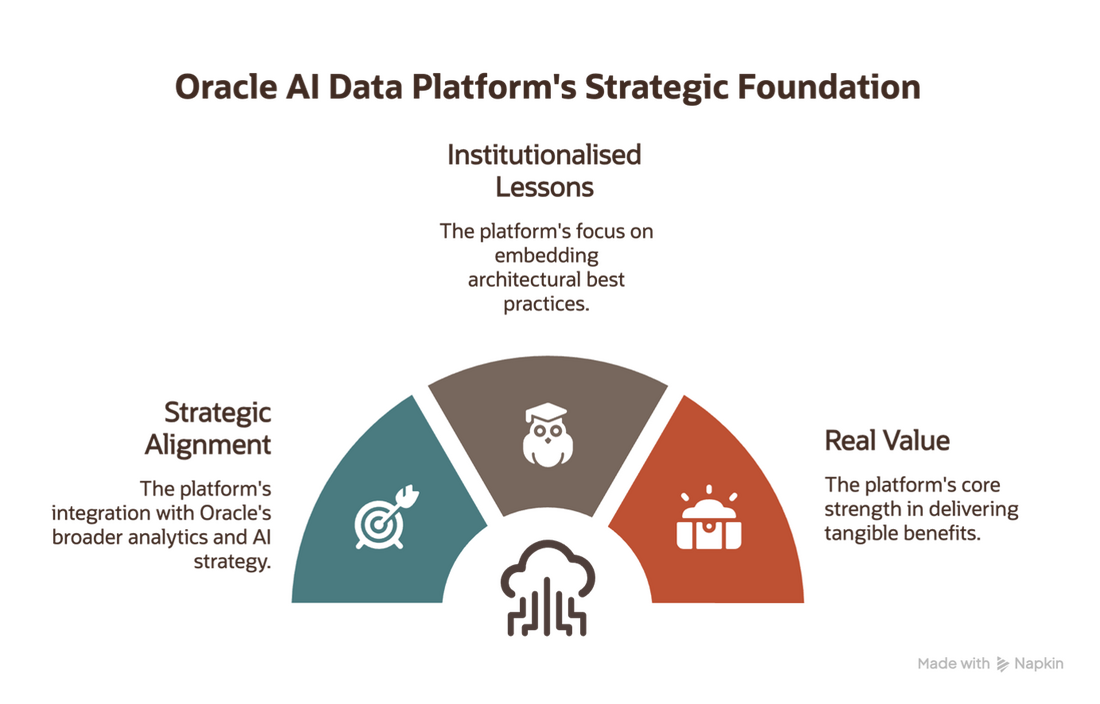
Seen in this light, Oracle AI Data Platform is not about new technology. It is about institutionalising hard won architectural lessons.
And that is where its real value lies.